Start here
What is a ceilidh? No steps needed
A plain answer for first-timers: what a ceilidh is, whether you need to know the dances, who calls them and what the Inverness dinner night adds.
Book the ceilidh dinner ↗Quick answer
A ceilidh is a Scottish social evening that today usually means dancing to live traditional music. You do not need to know the dances. Wikipedia says the basic steps can be learned easily and that a short lesson often comes first, and in Scotland a caller may teach each dance. The Inverness evening adds a three-course dinner, a storyteller and a Highland dancing demonstration before the ceilidh dancing, which guests join.
The short answer
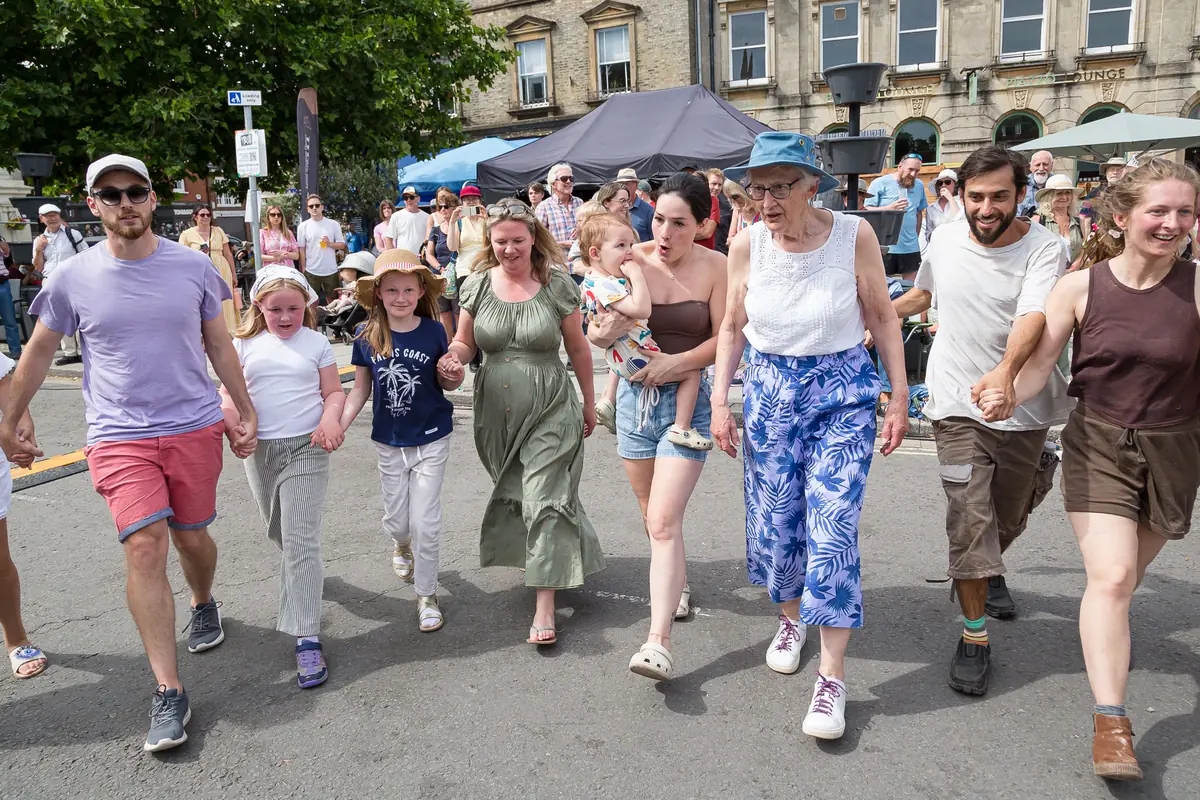
No, you do not need to know the dances. Wikipedia says knowledge of the basic steps is not always strictly necessary, that they can be learned easily and that a short instructional session is often given before the dancing starts. In Scotland a dance caller may teach the steps before each dance begins. The Inverness evening described on this site is a dinner with a resident storyteller, live traditional Scottish music, a Highland dancing demonstration and ceilidh dancing that guests join. Come in comfortable shoes, ready to be steered around the floor by people who have done it before.
What the word means
Wikipedia traces ceilidh to the Old Irish word for companion, which became the Gaelic word for a visit. At its plainest it means a social visit, and it began as a gathering of any sort, with no dancing needed. the Carmina Gadelica, a collection of Highland lore published in 1900, describes it as a literary entertainment of stories, poems, ballads and songs. The reformed Scottish Gaelic spelling is cèilidh. Dancing has largely taken over the meaning in recent decades, though music, song and storytelling still turn up at some events.
What a modern ceilidh looks like
Wikipedia describes a modern ceilidh as an event where dances often alternate with songs, poetry, storytelling and other party pieces. Clubs, schools, universities and employers hold them, and weddings and fundraisers often include one. Dress codes range from compulsory Highland dress to informal. Scottish bands usually have between two and six players, and some add a DJ. Ceilidhs remain popular in rural Scotland, the article adds, even though discos and nightclubs have taken some of their audience. The Inverness night is a seated dinner with a ceilidh at its end, not a hall dance.
Who teaches you the dances
Ceilidhs rely on a caller, a person who explains each dance and calls the moves. Wikipedia says a Scottish dance caller may teach the steps before each dance, and that callers are there to make sure non-dancers can take part. The booking page for the Inverness evening says ceilidh dancing is part of the night and that guests join in, but it does not say who leads it. Expect the usual ceilidh habit of showing you before you start, and treat that as a custom of the form rather than a promise about one venue.
The dances you might meet
Three dances come up again and again in descriptions of Scottish ceilidhs. The Gay Gordons is a march round the room in couples. The Dashing White Sergeant is danced in groups of six, split into two sets of three. Strip the Willow sends the top couple of a long set spinning down the line, one dancer at a time. None of them asks for prior training, and the band and caller choose which ones to play on the night. The sister guide on this site, Ceilidh dances explained, walks through each one.
Read next: Ceilidh dances explained
Ceilidh, country dancing and Highland dancing
People mix up three Scottish dance traditions. Scottish country dance is a social form for sets of couples, with set steps such as the skip-change of step and the pas de basque. Ceilidh dancing, like English country dancing, usually uses walking or running steps, and Wikipedia describes the events as informal, energetic and noisy, with beginners in mind. Highland dancing is a different thing again: a competitive solo style, recognised as a sport in Scotland. A Highland dancing demonstration on the night is something you watch. The ceilidh part is something you do.
The music behind the dancing
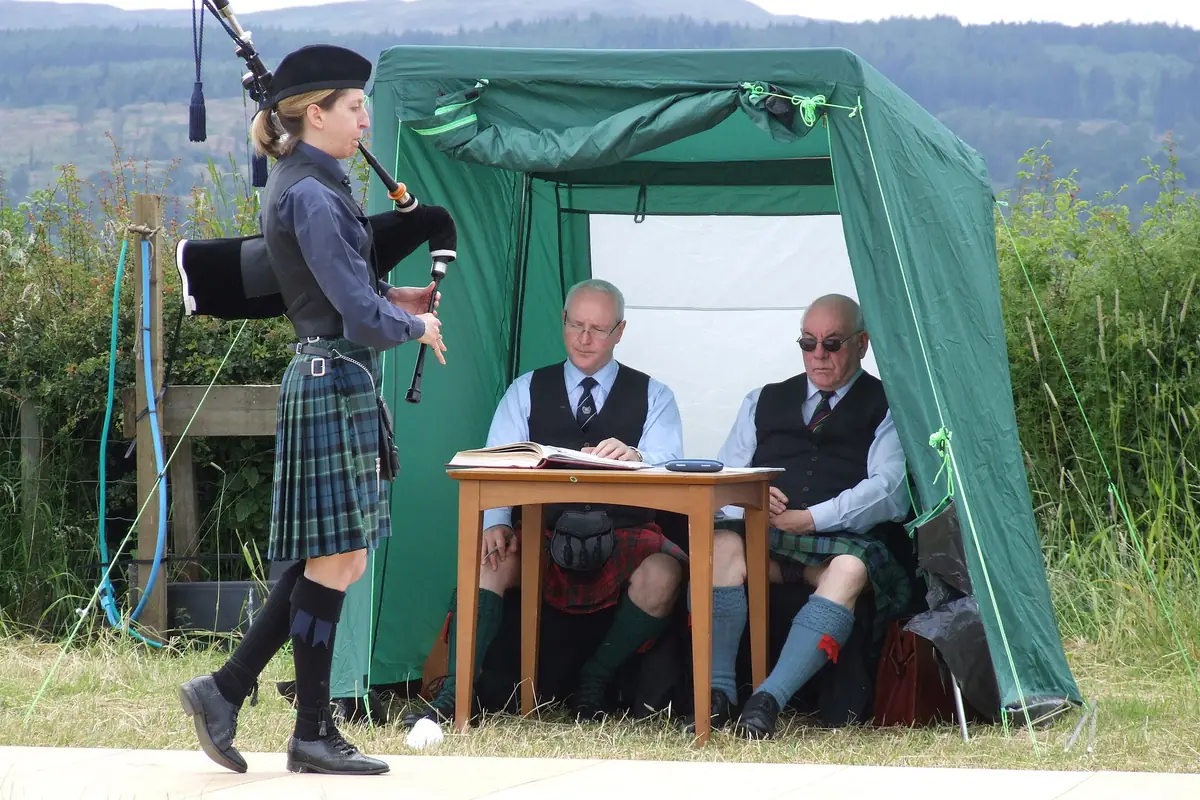
Scottish dance music is built on reels, jigs and strathspeys, with marches for dances such as the Gay Gordons. Wikipedia lists the fiddle, the accordion, the tin whistle and the Great Highland bagpipe among the instruments of Scottish traditional music, and notes that ceilidh bands may add guitar, drums and bass. Bagpipes are first attested in Scotland around 1400. The booking page promises live traditional Scottish music at the Inverness evening and does not name the instruments, so go for the sound, not for a particular line-up.
How the Inverness evening fits the old meaning
The older ceilidh was a night of stories, poems and songs, and the Inverness format keeps that thread. A resident storyteller tells Highland stories over a three-course meal of traditional Scottish food, a Highland dancing demonstration shows a solo tradition, and the ceilidh dancing brings everyone onto the floor. It lasts about two hours, and the venue sits on Church Street in the city centre. Which tales the storyteller tells is not fixed, so read the evening as a themed night and not as a lecture on any one period.
What to wear and bring
Wikipedia says ceilidh dress codes run from compulsory Highland dress to informal, and the booking page for this evening gives no dress code at all. Ordinary smart-casual clothes you can move in will do, with shoes that stay on your feet through a spinning dance. Nobody needs a kilt. Drinks are not included in the ticket, so allow for what you plan to order, including the optional whisky or local beer flight the booking page offers as an add-on. Bring a phone with the booking confirmation.
Who this isn't for
Pass if you want a quiet dinner where the music stays in the background, because the dancing is part of the evening. Pass if you want to sit out every dance, since guests are invited to join in. It also suits people who like their meals served quickly less well: the booking page shows a 4.3 rating from about 170 reviews, and some reviewers say service can be slow at busy times. And if you want a free, drop-in night of tunes in a bar, a pub session is a different evening, covered in the comparison guide.
Booking
Open the calendar below and choose a night. The ticket covers a three-course meal, live music, storytelling, a Highland dancing demonstration and ceilidh dancing in about two hours. Drinks cost extra. You can cancel at least 24 hours ahead for a refund if you booked through GetYourGuide, and the ticket is marked wheelchair accessible. Prices appear in your own currency on the calendar, so this page quotes none. The venue runs the evening, not this site.
Frequently asked questions
Do I need to know ceilidh dances?
No. Wikipedia says the basic steps can be learned easily and a short lesson often comes before the dancing. In Scotland a caller may teach each dance. The Inverness evening says guests join in, so arrive willing and the rest follows.
What does ceilidh mean?
It comes from an Old Irish word for companion and became the Gaelic word for a visit. It began as a social gathering of any kind and now usually means an evening of dancing to live traditional music.
Is a ceilidh the same as Highland dancing?
No. Highland dancing is a competitive solo style, recognised as a sport in Scotland. A ceilidh is a social dance where everyone joins in. The Inverness night includes a Highland dancing demonstration and then ceilidh dancing.
What should I wear to a ceilidh?
Wikipedia says dress codes range from compulsory Highland dress to informal. The booking page gives no dress code, so wear clothes you can move in and shoes that stay on your feet through a spin.
Is dinner included in the Inverness ceilidh ticket?
Yes, the ticket includes a three-course meal of traditional Scottish food. Drinks are not included, though the booking page offers an optional whisky or local beer flight as an add-on.
How long does the evening last?
About two hours, by the booking page. That covers the meal, the storytelling, the music, the Highland dancing demonstration and the ceilidh dancing.
Sources